
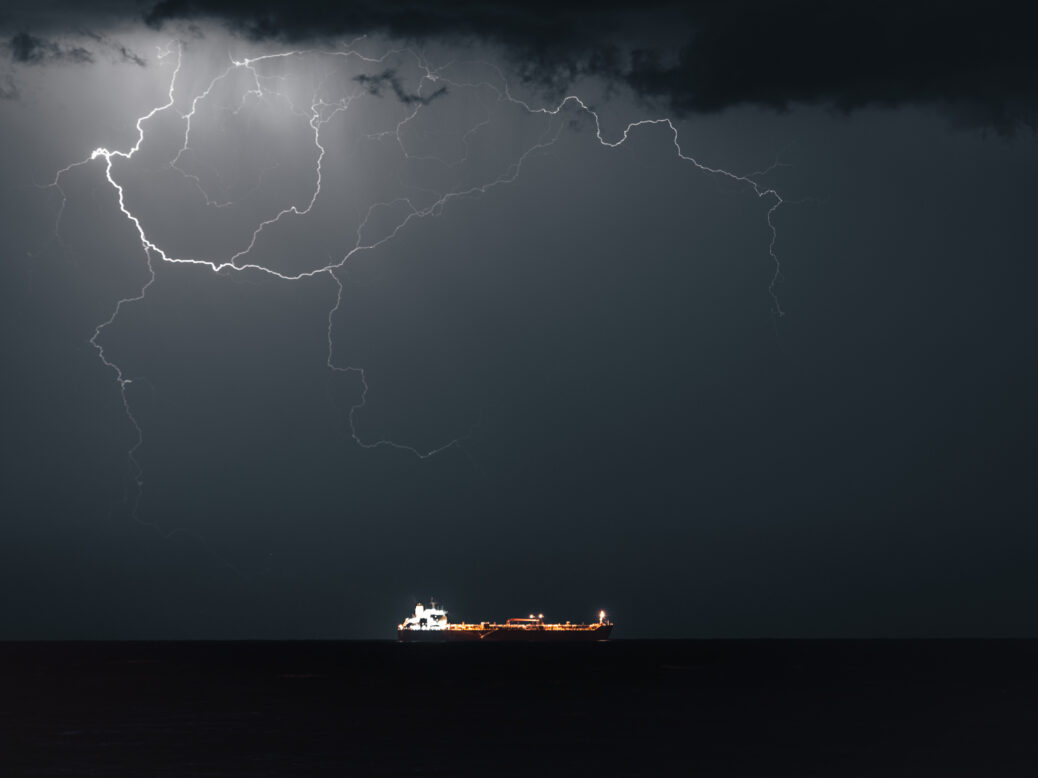
Amid the noise from the war in Iran, as oil and gas prices soar then fluctuate, and physical scarcity looms, you may have missed some other global energy news. In India this week, the government announced that in response to the conflict it will accelerate the commissioning of new wind farms and energy storage systems. China’s top battery manufacturers have gained more than $70bn in market capitalisation in the past month. The head of the International Energy Agency, the IEA, has predicted that the crisis will lead to a surge in renewables investment, and urged Europeans to “electrify everything”.
In the short term the war has hugely increased uncertainty in energy and financial markets. Countries are scrambling to find alternative fossil supplies, at almost any cost. But in the medium to long term, most economic analysts have little doubt about its impact. Renewable energy sources will increasingly replace the demand for fossil fuels, and the world will split into “petro-states” and “electro-states”. The petro-states will continue to pursue the export of oil and gas. The countries aspiring to become electro-states will shift gradually, then rapidly, to reduced fossil fuel dependence by switching their heating and transport systems to electricity, powered by renewables and nuclear. They will do so in part on grounds of cost, in part to combat climate change, and to a great extent – greater, as a result of the war – in pursuit of energy security.
The world still uses oil, gas and coal for around 80 per cent of its fuel needs, but in truth these are terrible sources of energy. Fossil fuels are highly inefficient: almost two thirds of the energy is wasted in its production, transportation and combustion, before it has done any economic work at all. The result is that more than $4.6trn per year, equivalent to almost 5 per cent of global GDP and 40 per cent of the world’s energy spend, is wasted (it literally goes up in smoke). On top of this, fossil fuels are highly polluting, causing globally over five million excess deaths a year from respiratory and cardiometabolic conditions. And they are the principal cause of climate change, responsible for just under 70 per cent of all greenhouse gas emissions (including methane as well as carbon dioxide).
The reason fossil fuels have been used for so long, despite these disadvantages, is that they are storable and – therefore – transportable. But the world now has an alternative. Electricity is a far more efficient way to provide useful energy because very little of the primary source is wasted. Electric vehicles turn around 90 per cent of their electricity input into kinetic energy in the wheels, compared to around 25 per cent for internal combustion engines. Induction cooking hobs are around 80 per cent efficient, compared to 40 per cent for gas. Heat pumps can deliver four times as much heat per kilowatt hour of energy input as gas boilers. At the primary energy level, because they produce almost no waste heat, renewables such as wind, solar and hydropower offer an efficiency gain of more than a third over fossil systems for the same useful output.

Wind and solar have the huge advantage of being capable of generating electricity relatively cheaply more or less everywhere, limited in most places only by the cost of transmission grids. For this reason, over the last decade, these two sources have supplied most of the world’s new electricity requirements. In 2025 their growth exceeded the growth of total power demand, leading to a fall in fossil fuel generation. But the biggest new development has been in battery technologies: originally led by American and Japanese companies, now by Chinese ones. The latest Chinese batteries offer the potential to give electric vehicles a range of 600 miles on a single charge, and to enhance the performance of all kinds of equipment from smartphones to robots, drones to spacecraft. Batteries solve the problem of intermittency (the fact that no power is generated when the wind isn’t blowing and the sun not shining), which for so long has been renewables’ Achilles heel.
Over the last decade these technological innovations have combined to make energy from renewables, in most parts of the world, cheaper than energy from fossil fuels for two of its three main non-industrial uses. This happened a decade ago for power, and is now also true, on a lifetime basis, for electric vehicles (EVs) in some countries. (The comparative cost of petrol and diesel cars and EVs depends greatly on taxes and charging systems.) For heating, the renewable cost curve has not yet fallen below that for fossil fuels. Air and ground source heat pumps will become much cheaper as they are rolled out at scale (a process which has happened much faster in Sweden and Germany, for example, than the UK). But this is a familiar Catch-22: they will be rolled out at scale when they are cheaper. This is why subsidies and building regulations are needed at this stage, exactly as they have been for wind and solar (and nuclear).
The war in Iran will accelerate this global trend to electrification. Being “home-grown”, renewables have always been a source of energy security. But the realisation that the world’s oil and gas markets can be so easily and so hugely disrupted in the Strait of Hormuz by the actions of a defensive and volatile Iran – a situation likely to persist, whatever the war’s outcome – will lead many countries to seek to reduce their fossil dependence. Oil and gas prices have now spiked twice in half a decade as a result of geopolitical conflicts, in Ukraine and now in the Gulf. The economic costs – and the political consequences in terms of living standards and social unrest – far outweigh the cost of speeding up the clean energy transition which is already under way in most countries.
This will have a wider geopolitical impact. At the most recent UN climate conference, COP30 in Brazil in November, more than 80 countries, both developed and developing, wanted to draw up a “roadmap on transitioning away from fossil fuels”, the global goal agreed at COP28 two years previously. But a concerted bloc of oil and gas producers, led by Russia and Saudi Arabia, were implacably opposed, and the proposal failed. Observers noted that it was difficult to see how this would change at future conferences, so further progress on the clean energy transition looks more or less impossible under the consensus-based UN regime. Instead, the idea will be taken forward by a “coalition of the willing”. The first conference of this coalition will take place later this month in Santa Marta, Colombia, co-organised with the Dutch.
So the world will come to divide between the petro-states and those seeking to become electro-states. Under Donald Trump, who has ruthlessly turned “drill, baby, drill” from slogan into policy (granting new oil and gas licences in the Arctic and withdrawing a range of renewable energy regulations, subsidies and permissions), it is clear that the US is lining up among the petro-states, alongside Russia, Saudi Arabia, the UAE, Qatar and others. Meanwhile most of the world, unblessed by oil and gas resources of their own, will inevitably come to see themselves as electro-states, as they seek to reduce their dependence on fossil imports and shift towards renewable energy systems. For the EU, Japan, South Korea, India, and almost all of Asia and Africa, this will not require much of a choice at all: the imperative of energy security will give them little alternative. A few countries – Canada, Australia, Norway, Brazil – will straddle both camps, continuing to export oil, gas and coal while going electric at home.
The big winner from this bifurcation will be China, whose dependence on both Russian gas and Gulf oil makes it particularly vulnerable to geopolitical instability. China is already closest to becoming an electro-state. Electricity makes up almost a third of its energy consumption, about 50 per cent more than in the US or Europe. Having invested heavily in solar and wind power over the last decade, it now accounts for roughly a third of the entire world’s renewable generation capacity. Perhaps even more importantly, it dominates the world’s green energy supply chains, both in manufacturing (notably in wind turbines, solar panels and batteries) and in the critical minerals they require. At COP30, China stood with its geopolitical ally Russia in opposing the roadmap to transitioning away from fossil fuels; but it will be the glad beneficiary of all those countries that now decide to follow it.
And the UK? Notwithstanding the alacrity with which much of the media, the Conservative Party and Nigel Farage have become cheerleaders for the UK’s dwindling North Sea fossil reserves, it’s clear that in the medium-term Britain has no option but to double down on its already well-advanced path to becoming an electro-state. Even if the government were to grant new licences for oil and gas drilling, as many are demanding, this could only cover a fraction of UK demand: the remaining fields are too small and most North Sea oil and gas is exported. So our import dependency would barely be affected, and nor would the price consumers pay, since this is set by the global market. New drilling would also almost certainly require very significant tax subsidies.
The Starmer government has agreed to allow limited oil and gas production on or near to existing areas in the North Sea, but so far has remained steadfast in its commitment not to issue licences to explore new oil and gas fields. Many might think it should receive more credit for this: such a stance makes it the first major producing country in the world actively to comply with the IEA’s warning that there is no room for further global fossil exploration if the Paris Agreement goal of limiting warming to 1.5C is to be met.
That will not, of course, stop the lobbying of the fossil fuel industry, now at full blast. As its markets decline, it is clear that the petro-states will apply diplomatic, trade and economic pressure on the countries to whom they export. But they cannot escape the truth that the only way for the global fossil fuel industry now is down. As for Donald Trump, so generously funded by oil and gas interests (both in the US and by the Gulf states), who has made his pro-fossil, anti-renewable crusade into a major part of his political persona: it would be pleasingly ironic if his ill-fated adventurism in Iran leads to the world driving away in the opposite direction.
[Further reading: The world energy shock is coming]
Content from our partners



Related
Join the debate
Subscribe here to comment